Administrator
News
04 October 2019
Hits: 4727

New waveforms, new capabilities, new cooperation

  • Print
  • Email

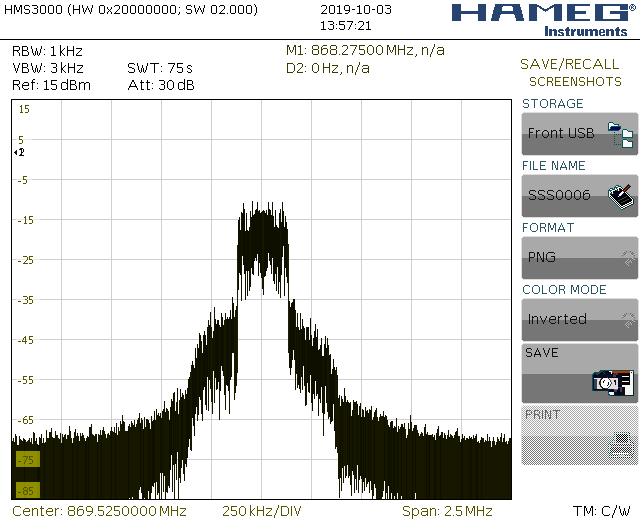
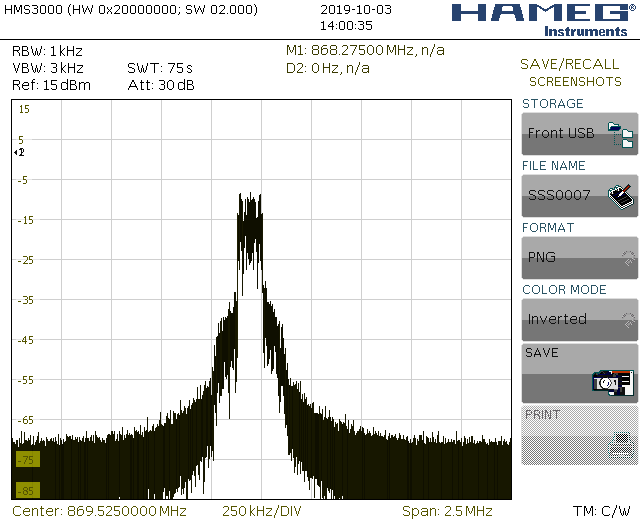
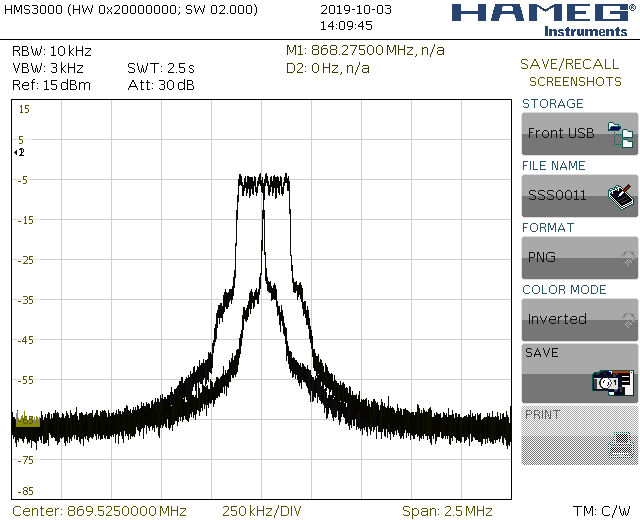
That's been a month of hard work, and we have achieved significant results. The most interesting is the development of more narrow-band modulations/waveforms with a bandwidth of 500/250/125 kHz. We are heading towards the use of the ISM 868 MHz band. In this range, it is possible to radiate 0.5W of power for unlicensed IoT/M2M services. More information in the next month.

We also made new cooperation with the Institute of Aerospace Technologies (IAT) NTUU "KPI" and the section of Aircraft and Robotic Complexes of the Junior Academy of Sciences of Ukraine. The relay node for high-speed relay transmission, which combines 2 modems, was finalized. We are working on arranging a test line.


fig.1. BW 500kHz

fig.2. BW 250kHz

fig.3. BW 125kHz


fig.4. BW 2x125kHz

 
Administrator
News
05 September 2019
Hits: 4553

Successes of last summer month

  • Print
  • Email

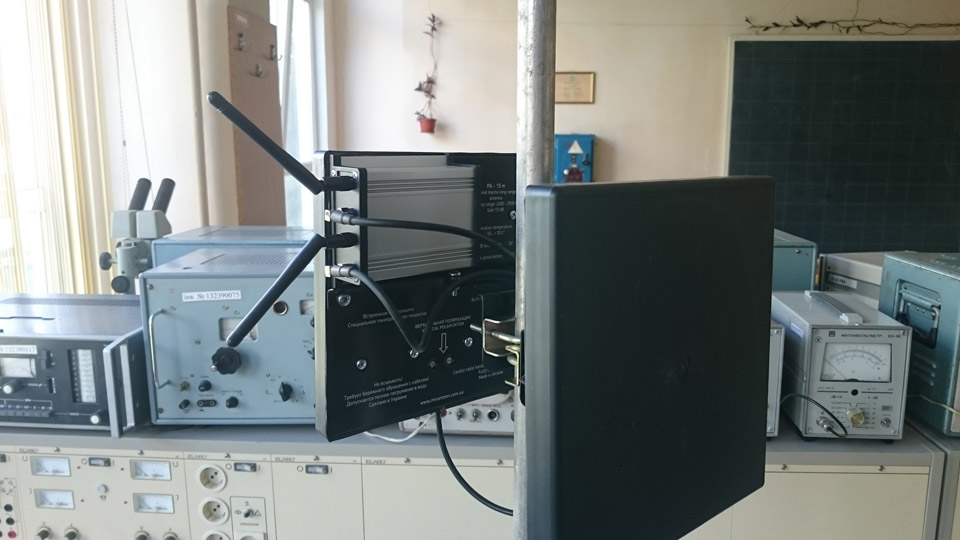
Let's sum up our achievements over the past month. Relay modes of our modems were worked out in one (devices of single rank) and in different frequency ranges (434 MHz / 2.4 GHz), including usage of high-speed relay links (devices of different rank). The power consumption modes (0.175 / 0.32 / 0.75 / 1.1 W) and adaptive change of processor clock frequency (0 / 64 / 170 / 487.5 MHz) depending on the task being performed were worked out. The 3rd week of continuous operation of one of the repeaters went on (Fig. 1). It works fine, but sometimes it freezes – rebooting is needed. We are working on fixing this issue. We've assembled an intermediate relay device with 2 directional antennas (Fig. 2). 2 modems that are connected directly via UART were used for this. In addition, it was possible to implement spatial transmit diversity.

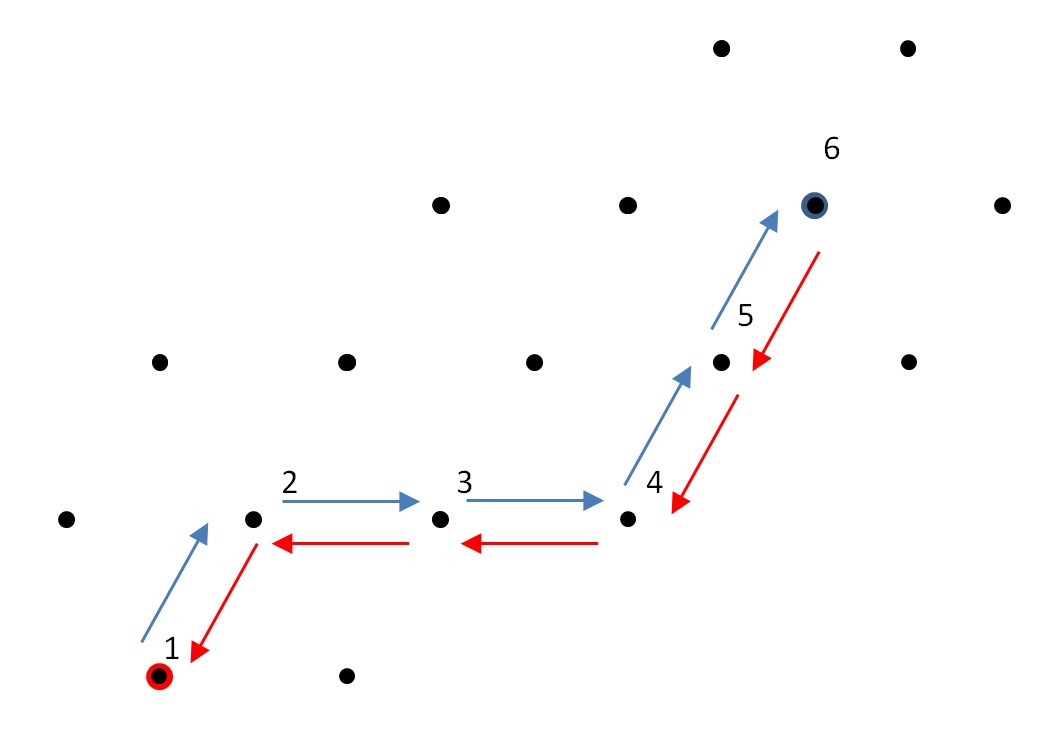
Directional routing and addressing of zones/cells by different keys of PHY Layer Enc./ “DSSS modulations” (PHY Layer Direct Routing) were worked out to eliminate retransmissions and additional packet collisions when building complex MESH networks (Fig. 3). When placing a network of modules, they are surrounded by stations with only unique PHY Layer Enc. keys. By transmitting a signal with a certain “DSSS modulation”, only the desired station will receive it, while others will be able to do their tasks, and so on in the chain.


fig.1

fig.2

fig.3


Administrator
News
01 July 2019
Hits: 5078

The first batch of the second series of our modems is ready for use.

  • Print
  • Email

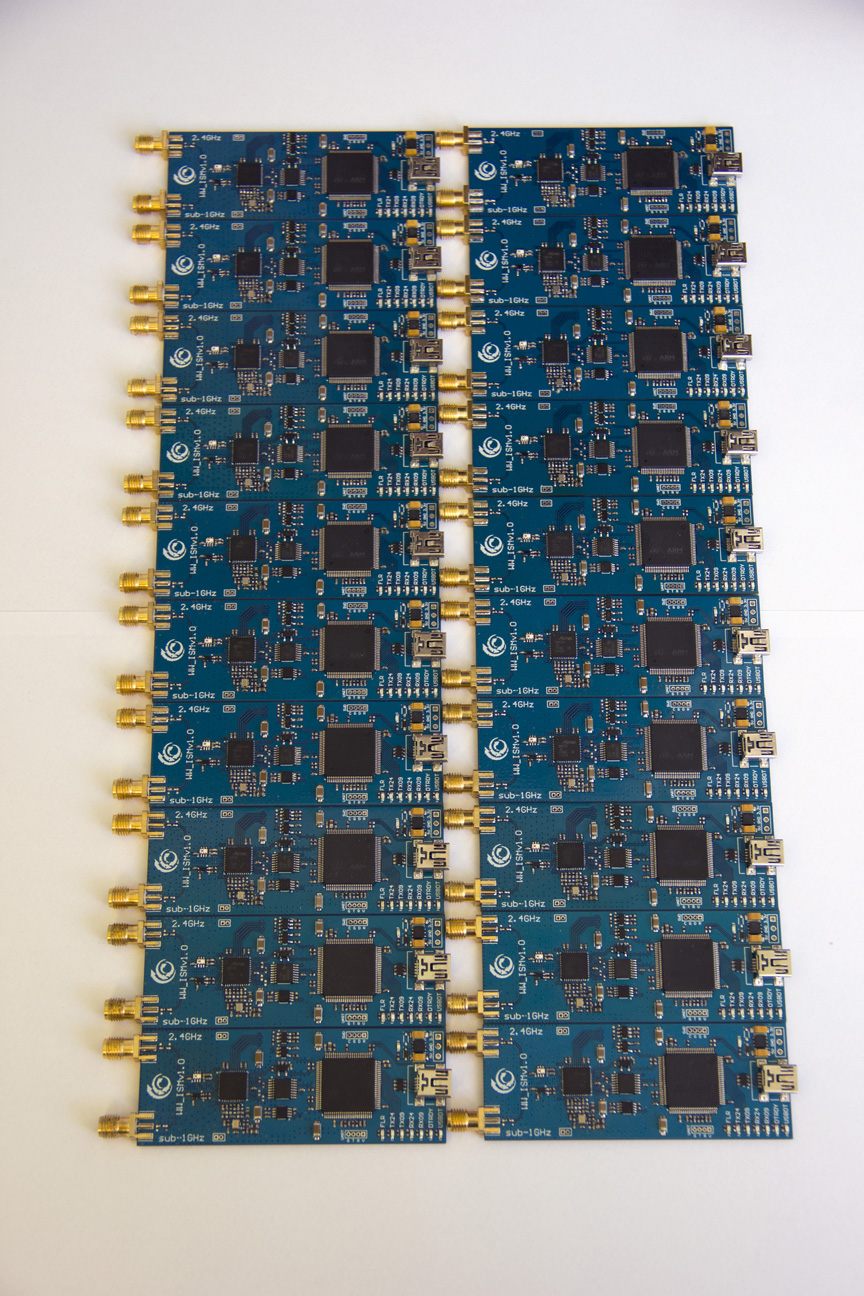
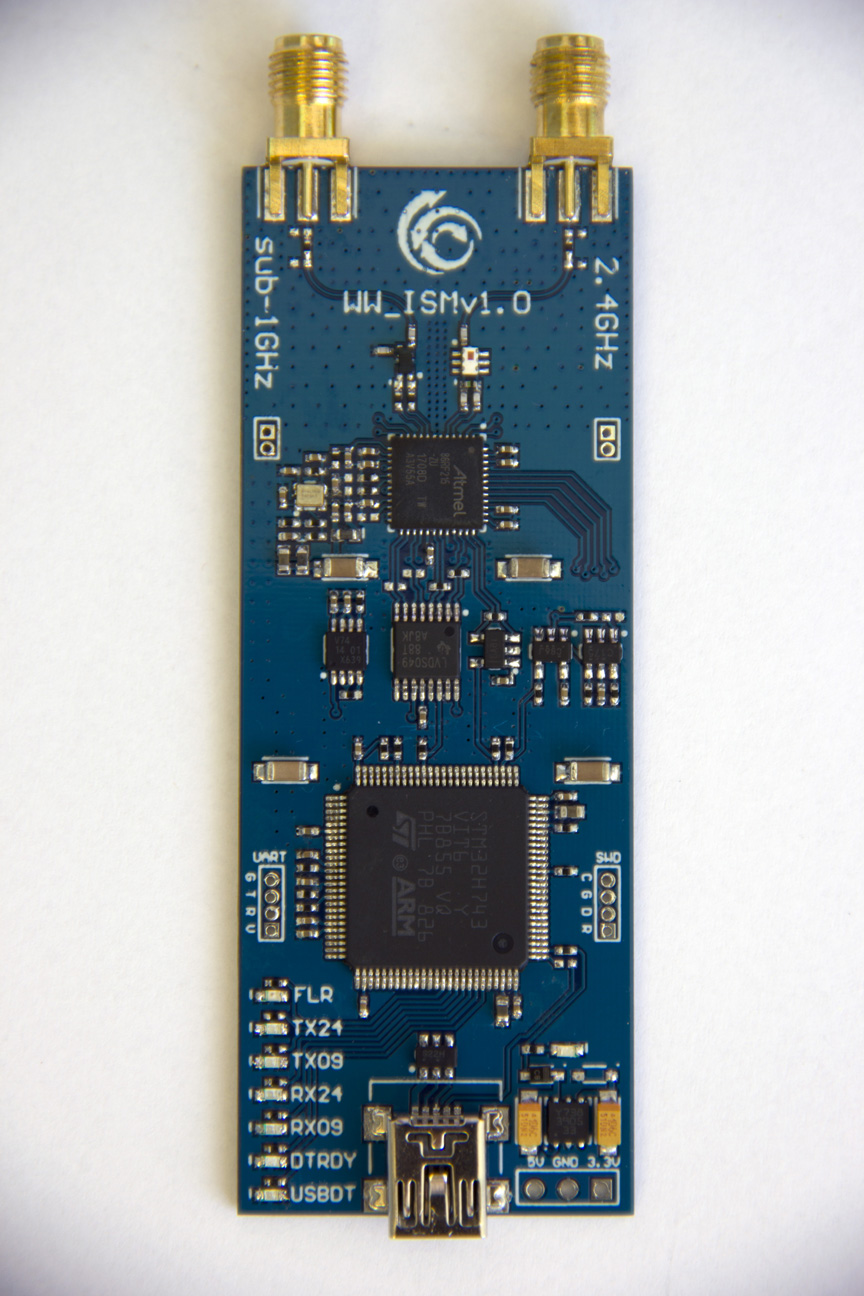
HOORAY! The first batch of the second series of our modems is manufactured and ready for use. The name of the new series WorldWide_ISM (WW_ISM v1.0). The modem has 2 independent radio modules sub-1GHz (389-510; 779-1020 MHz) and 2.4GHz (2400-2483.5 MHz). Radiation power 25mW (14dBm). Baseband: CWC - 1 MHz, IEEE Std 802.15.4g - 0.16 ... 1 MHz. Modulations and data rates - proprietary CoWiComm: MMOK / MMBOK (spread spectrum protection 30… 12dB + CH-DSSS) - 7.6… 112.88 kbps; IEEE Std 802.15.4g: FSK-2 - 50 ... 400 kbps; O-QPSK - 250 ... 2000 kbps; MR-OFDM (802.15.4g) - 50-2400 kbps. It can receive up to 6 independent (with different keys of PHY Layer Enc) noise signals with MMOK simultaneously. More details soon in the upcoming datasheet for the device. Mode of spread spectrum modulation of spreading factor SF = 4096 (+36 dB) and higher data rate modes with frequency and phase correction are being refined now.

This batch is released to launch a pilot network, on which all aspects of the “pocket base station” concept will be worked out. Including Ad-Hoc / MESH data transmissions, synchronous service by the main device of dozens of slave devices (like mobile CDMA IS-95 communications), asynchronous reception of independent signals from a variety of cheap (<2 $) transmitters. The project lasts until the end of summer, and it will be hot ;) ... Details in the following news soon…

         
Administrator
News
31 July 2019
Hits: 4853

The first month of field trials successfully done.

  • Print
  • Email

It's time to sum up. During the month of field testing, we were able to confirm the capabilities of all data rates of our proprietary modulation without correction of the frequency and phase (7.68 / 13.44 / 23.04 / 38.4 / 61.44 / 92.16 / 122.88 kbps, at SF = 1024 / 512 / 256 / 128 / 64 / 32 / 16). In urban conditions at 433.92 MHz and a distance of up to 500m, the quality of communication is good; the signal passes one high-rise building without problems. Further up to 1.5 km, communications can be established only at the EMF diffraction peaks or on the line of sight. Communication at longer distances was not checked. For cases when it is necessary to provide excellent communication over a large area, a relay mode (Ad-Hoc) or targeted/addressed transmission is implemented and tested. With 2 repeaters, the quality is excellent. Generally, the number of repeaters is unlimited; the network capacity is limited by the address space of unique users. To eliminate possible collisions, different frequencies or different PHY Layer Enc. keys / ''DSSS modulations” can be used. Also, we checked the capabilities of the built-in modulations of the IEEE Std 802.15.4g radio chip. At MR-OFDM, data rates up to 2.4Mbps can be reached. Recently, we started testing the simultaneous reception of independent signals with different PHY Layer Enc key at the operation on the same frequency. When receiving signals from 4 devices, the reception itself is successful, but decoding data gives errors, - is being fixed. One modem can simultaneously receive up to 6 independent signals and 8 PHY Layer Enc Key are built-in to each modem.

Administrator
News
05 February 2019
Hits: 4957

All trials of last prototypes are done!

  • Print
  • Email

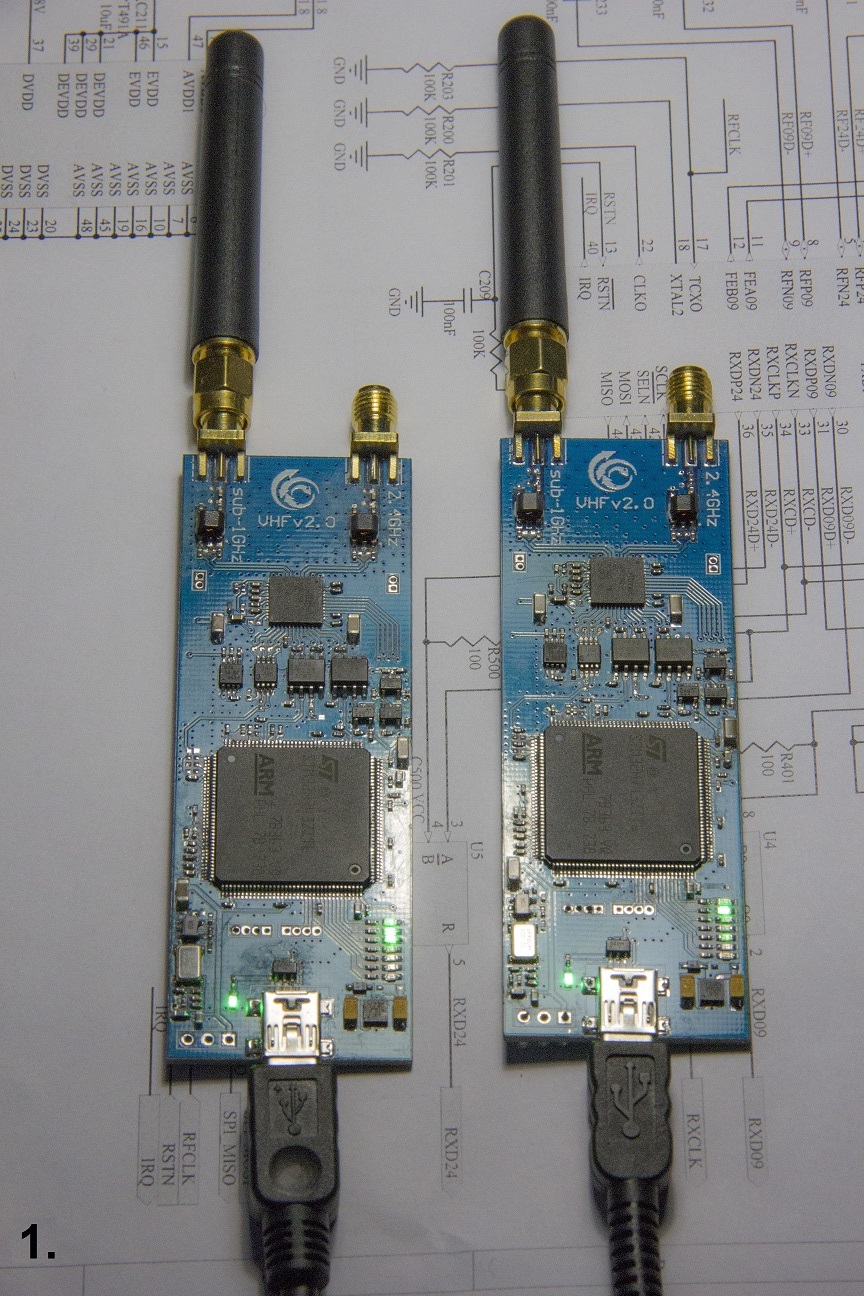
Hello! Latest News of the project… We’ve finished all trials and testing of our last prototypes (1). All requirements and goals have been accomplished. And we go to the production of serial devices. We plan to produce 20 devices for our first pilot project that will be deployed in March.

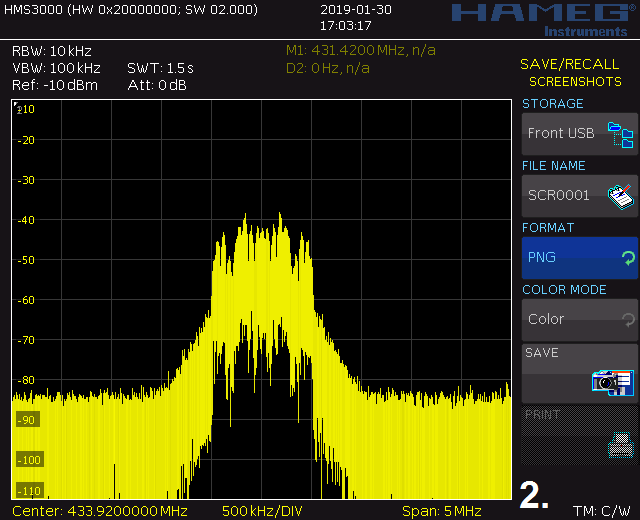
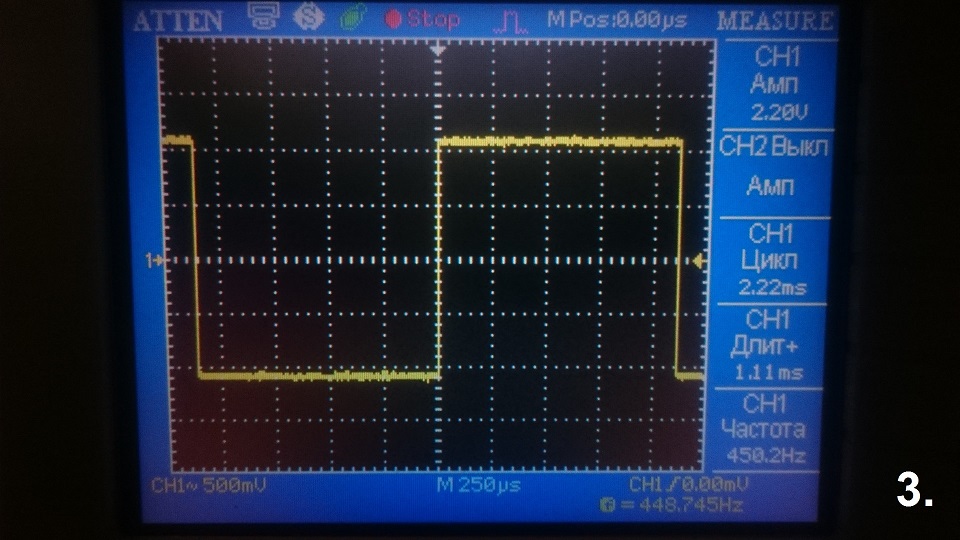
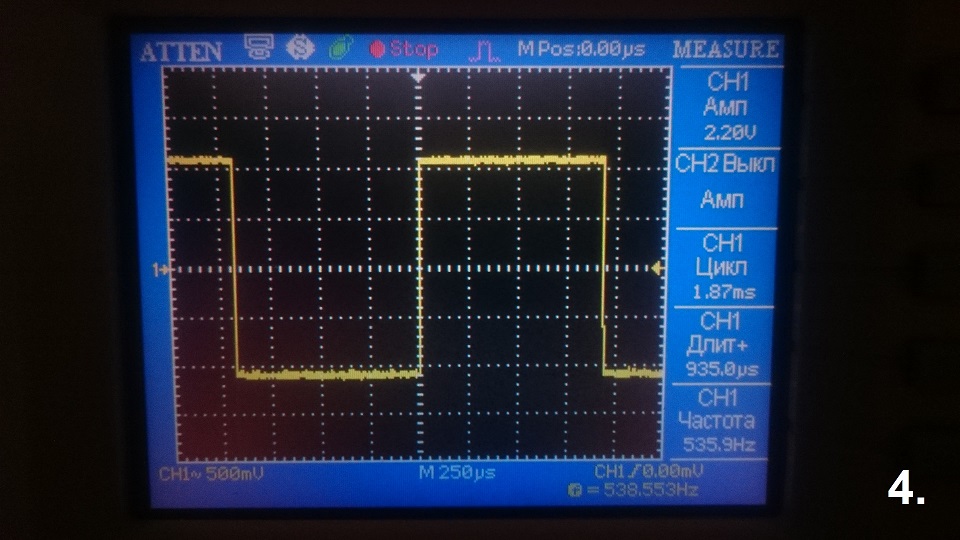
In addition, some significant results have been achieved. We’ve developed and tested a new transmission mode with ultra-low out-of-band signal radiation; the spectrum is shown in (2). Unfortunately, we cannot show the best results due to redundant phase noises of this release, but we know how to fix it in the serial device. Also, stable operation of MCU at 480MHz of CPU CLK has been achieved where the only 400MHz is defined as the maximum value. Measurements of the processing time of a symbol with a time limitation of 1.024ms are shown at (3) - 400MHz and (4) - 480MHz.


  1. New series of CWC modems is coming soon...

Page 1 of 2

  • 1
  • 2
  • »
  • End
© 2026 .. All Rights Reserved. slot gacor
  • Home
  • Prototype
  • Applications
    • Communications for SEE/IoT
    • Automotive M2M/V2V Communications
    • Communications for Drones
    • Communications for Security
    • Military Communications
  • Technologies
    • Asynchronous DSSS Transceiver
    • PHY Layer Encryption
    • Asynchronous CDMA Multiuser Interaction
  • News
  • About Us